
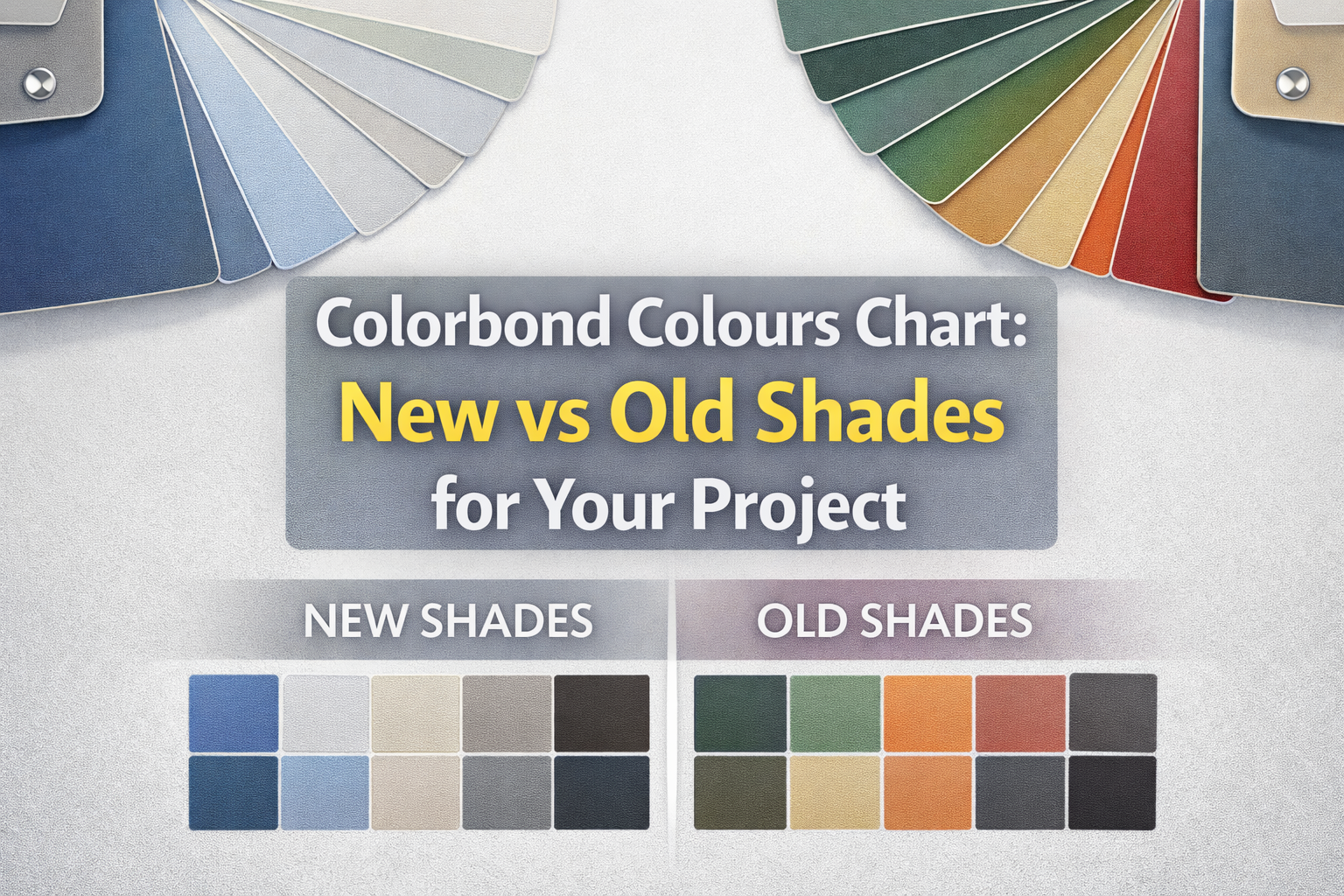
Choosing the right Colorbond colour for your project is a critical decision. If you’re considering the latest shades from the new Colorbond range or exploring timeless options from the older colour chart, the right choice can elevate the aesthetic and durability of your roofing, fencing, or cladding.
This comprehensive guide will help you navigate the Colorbond colours chart, comparing new and old shades, offering expert advice on choosing the best colour for your needs, and highlighting any regional variations.
What is the Colorbond Colours Chart?
Colorbond, a leading Australian brand known for its high-quality metal roofing products, offers a wide variety of colours for its roofing and cladding systems. The Colorbond colours chart showcases these colours, which are made to withstand the harsh Australian climate, providing durability, style, and environmental sustainability.
Colorbond colours are available in two main categories:
- New Colorbond Colours: These are the latest additions to the range, designed with modern aesthetics in mind.
- Old Colorbond Colours: These are classic shades that have stood the test of time and remain popular due to their versatile and timeless appeal.
Key Features of the New and Old Colorbond Colours
Popular Colours in New Colorbond Range
The new Colorbond colours introduce bold, fresh tones that reflect current design trends. Here are some of the popular new shades:
- Monument: A modern charcoal grey that provides a sleek, industrial feel.
- Surfmist: A light grey that pairs well with coastal and contemporary homes.
- Woodland Grey: A deep green ideal for blending into natural, bushland environments.
- Dune: A warm beige that offers a contemporary, earthy tone suitable for both residential and commercial buildings.
Timeless Colours in the Old Colorbond Range
The old Colorbond colours are more classic and have maintained their popularity due to their versatility:
- Classic Cream: A soft, warm cream that offers a neutral base for a variety of architectural styles.
- Riverstone: A dark grey that complements modern, industrial designs.
- Ironstone: A dark, earthy brown that works well with rustic and rural settings.
- Paperbark: A soft, light brown that has remained a favourite in traditional and colonial-style homes.
How to Choose the Right Colorbond Colour for Your Project
Choosing the right Colorbond colour depends on various factors, including the location of your property, its style, and the specific application (roof, wall, or fence). Here’s how to approach the decision:
- Consider the Environment:
- Coastal areas may benefit from colours like Surfmist or Shale Grey to complement the natural surroundings.
- Rural or bushland areas might look great with Woodland Grey or Ironstone for a more rustic, natural feel.
- Match the Architectural Style:
- For a modern, industrial look, choose bold shades like Monument or Basalt.
- Traditional homes can benefit from the timeless appeal of Classic Cream or Paperbark.
- Assess Energy Efficiency:
- Lighter colours, such as Surfmist, reflect more sunlight, helping to keep homes cooler in warmer climates.
- Darker shades, like Basalt and Charcoal, absorb heat and are ideal for colder climates.
Colorbond Colours by Region
Australia
In Australia, Colorbond’s range is tailored to the climate. For example, lighter colours such as Surfmist and Shale Grey are ideal for hot, sunny regions as they reflect heat, while darker colours like Monument are often chosen in cooler areas for their heat-absorbing properties.
International Availability
Colorbond products are now available in several international markets, including parts of Asia, the Middle East, and New Zealand. Availability of certain colours may vary depending on regional demand and climatic conditions.
Pros and Cons of New vs. Old Colorbond Colours
Pros of New Colorbond Colours:
- Trend-Forward: New shades reflect contemporary design trends.
- Variety: A wider selection of colours suited to modern architectural styles.
- Energy Efficiency: Some new colours are designed with more reflective properties to improve energy efficiency.
Cons of New Colorbond Colours:
- Limited Timeless Appeal: Some newer colours may not have the same long-term popularity as the older, classic shades.
Pros of Old Colorbond Colours:
- Timeless: Classic shades have enduring appeal and have been proven over time.
- Versatility: They tend to suit a variety of architectural styles and settings.
Cons of Old Colorbond Colours:
- Limited Innovation: Fewer new shades are introduced in the older ranges, which can limit design options.
Step-by-Step Guide: How to Select the Perfect Colorbond Colour
- Assess the Architectural Style: Consider whether the project leans towards modern or traditional.
- Consider the Environment: Factor in climate, surrounding landscapes, and environmental conditions.
- Review the Colour Chart: Explore both the new and old ranges to understand which shades work best.
- Order Samples: Always request physical samples to see how colours look under natural and artificial lighting.
- Consult with Experts: Speak with local roofing or design professionals to get recommendations based on their experience and regional preferences.
Local Variations in Colorbond Pricing and Availability
Colorbond prices can vary based on factors like region, the supplier, and whether the material is shipped locally or from abroad. For instance, in Sydney, Melbourne, and Brisbane, common colours like Surfmist or Monument may be more readily available and competitively priced, while in rural areas or smaller towns, you may find certain shades are more expensive due to shipping.
Local Competitors:
- Roofing suppliers near me: Local suppliers often offer competitive prices and discounts on bulk orders.
- Best Colorbond suppliers in [City Name]: Check local online listings for trusted Colorbond providers.
Conclusion
When selecting a Colorbond colour, it’s crucial to consider factors like style, environment, energy efficiency, and budget. Whether opting for a modern new shade or a timeless classic, understanding the available options can help you make an informed decision that enhances the aesthetic and longevity of your project. Don’t forget to consult local suppliers for availability and regional pricing.
Related Posts: iPhone 12 Pro Max Battery Replacement
FAQs
1. What is the best Colorbond colour for coastal areas?
Lighter shades like Surfmist and Shale Grey are ideal for coastal areas as they reflect sunlight and withstand saltwater exposure.
2. Are Colorbond colours the same internationally?
While Colorbond is available globally, the exact colour range may vary by region due to local preferences and environmental factors.
3. How long does Colorbond roofing last?
Colorbond roofing typically lasts between 20 and 30 years, depending on environmental conditions and maintenance.
4. Can Colorbond colours be changed after installation?
It is possible to repaint or replace Colorbond colours, but it is often costly and time-consuming.
5. Which Colorbond colours are most energy-efficient?
Lighter colours such as Surfmist and Shale Grey are more energy-efficient as they reflect heat.
6. What are the most popular new Colorbond colours?
Popular new Colorbond colours include Monument, Surfmist, and Woodland Grey.
7. How can I choose the best Colorbond colour for my home?
Consider your home’s architecture, environment, and the colour’s energy efficiency to choose the best shade.
8. What’s the difference between new and old Colorbond colours?
New colours tend to be trendier and more energy-efficient, while old colours offer timeless appeal and versatility.
9. Where can I buy Colorbond roofing materials?
You can purchase Colorbond roofing from local suppliers, major home improvement stores, or online.
10. Are there Colorbond colours that suit both modern and traditional homes?
Yes, colours like Classic Cream and Riverstone are versatile enough for both modern and traditional designs.




Leave a Reply